We Are Like The Dreamer Who Dreams
The Long Shadow of Twin Peaks: The Return's Finale—A Personal Reflection.

I. What is Your Name?
This summer David Lynch’s Twin Peaks has been on my mind. After Lynch died in January, I revisited much of his work but it’s the final hour of Twin Peaks: The Return—released eight years ago this month—that haunts me now.
For the uninitiated, Twin Peaks is ostensibly the story of FBI agent Dale Cooper, sent to the small town of Twin Peaks, Washington to investigate the murder of a high school sweetheart, Laura Palmer. Right away, we learn that Laura Palmer is more than just a girl; she is a character who seems to be everything to everyone—a loyal friend, a devoted girlfriend, a dutiful daughter, a beauty queen, a Meals on Wheels volunteer, a caretaker to her disabled brother, the fantasy of her therapist, solace for a reclusive shut-in. Laura is pure Americana—as symbolic as damn fine coffee and cherry pie.
But as the series unfolds, we also see how she leads a double life of prostitution, drugs, cheating, and that an otherworldly darkness follows her. This duality echoes throughout the series, as most of the characters in this quirky Pacific Northwest town are revealed to live double lives.
The town itself is an axis mundi, a center in which two masonic lodges—the Black Lodge and the White Lodge and the intra-dimensional characters who inhabit both—are locked in an eternal war. At a time when most tv shows were episodic and veered away from the philosophical and numinous, Twin Peaks was a revelation. I have explored the series for nearly 40 years, and I am still nowhere near mapping all of its mysteries.
For this essay, I’ll assume you’re familiar with Twin Peaks; I won’t try to sum up all 47+ hours of the mythology here. If you have not seen it and your tastes veer to the unusual or esoteric, stop reading now and report back after you’re taken the dive.
The release of Twin Peaks: The Return, 25 years after the end of the original series, coincided with a pivotal period in my own life, creating a synchronistic relationship to The Return on a deeply felt personal level. For the last decade of my life, I have wrestled with being existentially untethered. In 2016. I went through a brutal divorce from a man in the throes of a severe psychotic break. After the divorce, I embarked on a year-long road trip with him, a desperate and ill-fated attempt to save our relationship. Twin Peaks: The Return debuted at the trip’s disastrous end, as I settled in Bend, Oregon to rebuild my life. I watched the first episodes during the last week I ever saw him, and my own trauma fused with the show in ways I am still unpacking.
The past decade has been one of starting over: building new relationships, forging new friendships, shifting careers, moving, and trying to regain the stability of the home I once had but lost. There have been many adventures and much good work, but elements remain missing—like having a family, a deeper sense of purpose, and most of all, knowing a place that feels like home in every fiber of my being. To quote Edgar Alan Poe, there has been “a demon in my view.”
Any attempt to discuss the “meaning” of the final episode of Twin Peaks: The Return becomes too cerebral and misses the mark entirely. Throughout his career, Lynch refused any discussion of what his art “means.” Ever the artist, he understood that a work’s meaning lives in the unique relationship forged between creator and viewer.
In that final episode, Agent Dale Cooper returns to the White Lodge and travels back to the night of Laura Palmer’s murder. He meets Laura in the woods and she recalls seeing him in her dreams. He leads her by the hand through the dark forest, and for a moment, it seems that Laura might be saved. Then a a blood-curdling scream erupts from her, and she vanishes, undoing the original narrative arc of the series.
Passing through a portal into an alternative timeline (skipping a lot of detail here), Cooper makes his way to Odessa, Texas and knocks on a door. A middle-aged Laura Palmer answers—except she isn’t Laura. She introduces herself as Carrie Page, but Cooper, undeterred, asks her to come with him to Twin Peaks, Washington—the scene of Laura Palmer’s murder 25 years earlier, a place Carrie has never been. She agrees and slips back into the house to gather her things. There, a man slumps dead on the couch from a self-inflicted gunshot, a porcelain white horse figurine perches on the mantle (a symbol of the black lodge), an assault rifle is discarded on the floor. Neither mentions the horrific scene, and the series never returns to it—save for an offhand remark in the car from Carrie: “In Odessa, I tried to keep a clean house.”
Obviously she failed, and the darkness that plagued Laura Palmer seems to have found Carrie in this timeline as well.
Cooper and Carrie drive all night, arriving in Twin Peaks before dawn. Carrie registers nothing; the place is alien to her. Cooper drives to the Palmer house where he and Carrie knock on the door, and a stranger answers. She knows nothing of Sarah Palmer (Laura’s mother) or Laura. The entire ethos of the series, the cosmic battle between light and dark, played out in the provincial murder of a beloved but troubled high school girl, has been erased.
In the final scene, Cooper and Carrie/Laura stand in the driveway and a bewildered Cooper murmurs despondent, “What year is this?”
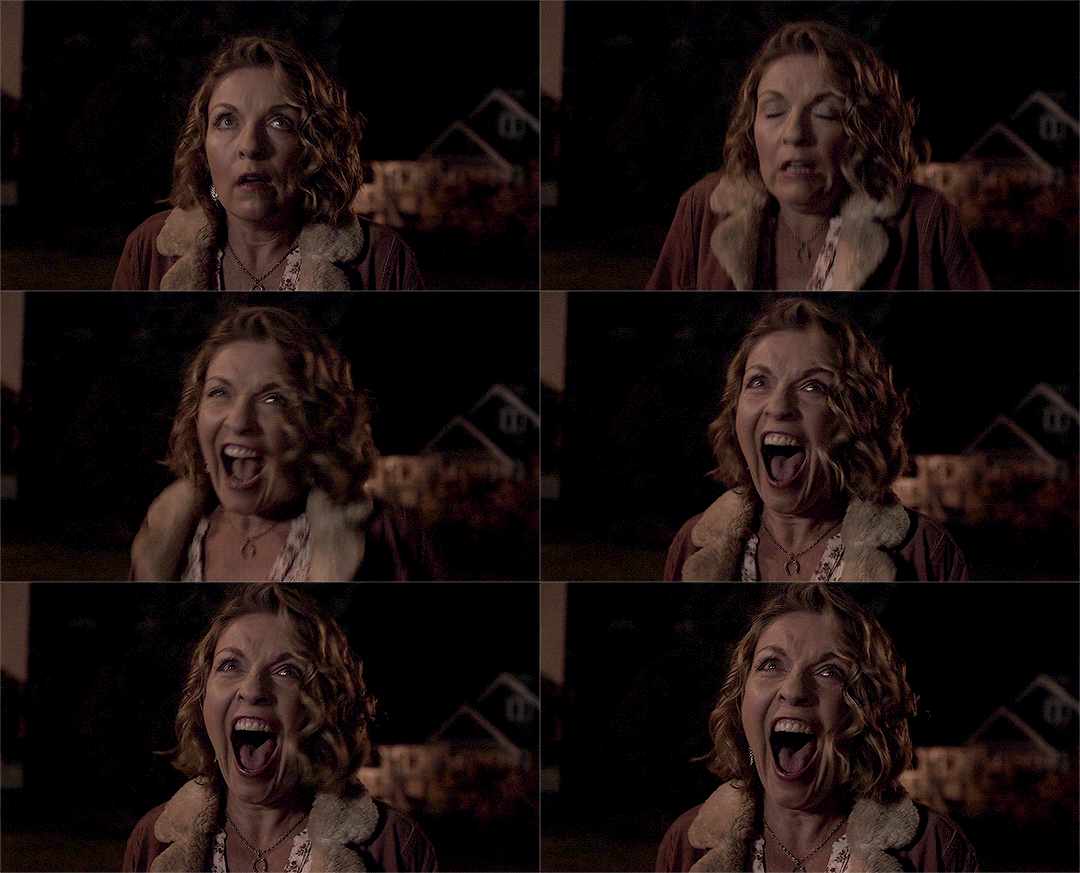
Carrie turns toward the house, and from within Sarah Palmer’s agonized wail echoes: “Laura!”, a flashback to the first episode in 1990 when Sarah realizes that Laura has not come home that night. Starring up at the dark house, Carrie begins to shake with an existential terror and seemingly from nowhere unleashes a guttural scream—long, visceral, terrified. Electricity flickers and the house fades to black. It is one of the most disturbing endings ever committed to film.
II. The Past Dictates the Future
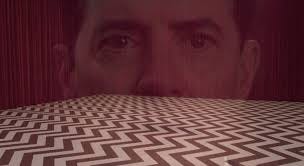
I moved to Phoenix, Arizona at the start of 2023, optimistic for a fresh start but starting over in my 40s has proven to be much harder than it was in my 30s or 20s. Suddenly, I’m the oldest one at the bar, the dating pool is shallow and polluted, and I am out of sync and out of time with the surrounding culture. If not for my road trips, my dogs, and a good book always close by, I don’t know how I’d endure with my family three time zones away and my friendships scattered to the wind after too many moves over too many years.
When I moved to Arizona, I was fortunate to be able to keep my Oregon house as a rental, so every summer I drive back to Central Oregon to check in on it. The trip is a personal pilgrimage, reconnecting me to a life I left behind—one I built on my own, far from the chaos of my ex-husband.
In the summer of 2024, I had one of my best trips back to Oregon. I was between jobs, so I had 14 days to make the trip. This allowed me to see old friends, to leisurely camp by the Deschutes River, to spend a full day reading a novel, drinking beer, and jumping in the river as my old and new dogs frolicked and played.
For the end of the trip, I drove to my favorite spot on the Southern Oregon coast and the two dogs and I had the best adventure. The weather was perfect, I found a remote camping spot that was too good to tell anyone about, and at night I ate at a friendly local bar with sassy bartenders where the locals gather to watch sports and catch up. For my old dog, Daphne, it was the last time I saw her genuinely youthful. As she chased waves, sea birds, and swam in the ocean with me, she seemed as vibrant as she had when I first brought her to this area 14 years before. On the long drive home, I crossed into three national parks and slept the last night under a huge Nevada sky near Area 51 where I scanned the sky all night for aliens (they didn’t show up).
The trip was so good that when it came time to make the journey up again this year, I decided that I would do what I rarely do—I would try to make the exact same trip but this time in 10 days.
The first afternoon, we stopped between Tonopah and Austin, Nevada, at what I thought was the same site from the year before. I pulled off the highway onto the gravel road after a long day’s drive, just as I had then. I passed some houses I vaguely remembered, but something felt off, different. At the campsite, I realized this was a proper campground with about 14 dispersed sites in a loop. The spot I’d stayed at previously was three isolated pitches, none visible to the others. It was late, so I had to stay, but this was an entirely different place from the year before and I rarely like staying in campgrounds as busy as this one. Already, the reality that the past cannot be recreated so easily was settling in.
Undeterred, Jones and I turned in early and slept soundly in the brisk mountain air. We rose at sunrise for a walk before breaking camp and the walk was gorgeous. Nevada mountains in the early morning possess a uniquely warm and lonesome character. Back on the highway, I check my map and realize I’d driven farther on day one than anticipated—likely passing last year’s site—and could easily reach Central Oregon in a day. I texted my friend Nancy who lives in the desert on the Nevada/Oregon border, whom I’d planned to stay with that night, to say I’d visit at trip’s end instead, that I was pressing on to Central Oregon.
From the Nevada state line to my final destination outside La Pine, Oregon, is a long, wide-open, and very lonely drive. I’ve driven this highway dozens of times, but each time feels like the first. The landscape just doesn’t make sense: the lonely trek east along Hwy 140 to Lakeview is nearly void of people and climbs several steep peaks via switch backs before descending into vast deserts. Then, the long haul up Highway 395 outside of Lakeview winds through open high desert, desert lakes, vast ranches, and towns frozen in time. It doesn’t seem right that there could be this much desert in this part of Oregon, but there is, and the four-hour drive from the state line to Central Oregon tests even the seasoned traveler.
Once in La Pine, I head to the Deschutes River camp spot from the year before, but I can’t find it. One forest road is closed; another leads down a narrow forest path I know is wrong, so a mile in I make a tight U-turn and head back to the highway. I’ve driven all day and daylight is fading. Just as I’m about to give up, I spot a dirt forest road on my right that I’d initially missed—and as soon as I turn onto it, I know I’m where I’m supposed to be. It’s Labor Day weekend, and as I make my way down the road, I see that all the first sites are taken. It’s not a good sign. Then I see the last one, with its carefully concealed turnoff, and it is empty. Miraculously, I secure the same spot from the year before and make camp by moonlight as the day fades.
The next morning, I drive out to the main road for cell reception and start messaging friends. Most are busy or scattered elsewhere, and with little notice of my arrival, my hopes of connecting today begins to fade. I decide to head to Bend and my favorite dog park, where you can hike for miles and let your dog swim in the river. But when we arrive, access to the river is severely restricted; the park district has closed most of the river entry for “restoration,” changing the whole feel of the place. It’s my birthday, and I try not to feel sad about the possibility that I will spend it alone.
I do eventually connect with friends and share good times with them, though we are all changing. My rental property is deteriorating, and the tenants just don’t care for it the way I did. Pulling up, I’m struck by how worn it looks after just three years away. I meet with a contractor to discuss projects large and small. The house needs a lot of work, and I have to decide if it’s work I’m willing to pour into a home in a town I’ll probably never live in again.
My mood lightens as I drive to the coast on Tuesday, escaping the smoke I’ve camped in for two days and the responsibilities of being a landlord. We arrive in the late afternoon, but the coast is socked in with fog. We try for a sunset, but clouds obscure the sun aside from few stray orange rays. Last year’s golden hours evade Jones and I, Daphne having departed across the rainbow bridge earlier in the year.
I head to my secret campsite, but as we pull into the site I notice red signs posted all round stating not to go through gates, that this land belongs to a local timber mill, and that permission to enter must be obtained from the land owner in writing. The site I had planned to camp at is not behind a gate and I still believe is technically on national forest land, or so the maps says, and since it’s late I take my chances and set up my tent for the night.
Well before dawn, I hear large trucks rumbling nearby. My pickup is a bit hidden, so they pass without noticing me, but then comes the distant roar of big machinery and chainsaws. My beautiful camp spot, it seems, has become the victim of another round of Oregon clear-cutting. I know I am not welcome here, so before trouble finds me, I break camp and set out to find another spot.
For the remainder of my time on the coast, the cloud layer never lifts. Jones and I hike many miles on the beaches and the friendly local bar is still friendly and local. But there is a different crowd in town this year, a crowd of “campers” who are not camping but rather living in broken down trucks and RVs.
After six days of actual camping, I know I must look and smell suspicious to the locals. I feel the need to spend money to show that I’m a customer and to wash off in the ocean and make myself as presentable as I can. Still, the nature of the town is changing, there’s a distrust in the air, and a worrisome element that has always been there is multiplying. Camping, for the first time, feels not so distant from homelessness.
On Friday, Jones and I drive all day and get to Nancy’s late in the evening. A thunderstorm moves across the Nevada desert but we find comfort in food, coffee, cigarettes, and conversation that runs late into the night. Of all the parts of my journey, this is the place that feels most familiar and I’m glad that I saved it for the end. Nancy’s kitchen table feels a lot like the counter at the R&R in Twin Peaks.
I wake up on the last morning still a full day’s drive from Phoenix. I watch the sun rise from a natural hot spring where we have camped on our eighth night and wild burros come to the tank to drink which torments Jones. This morning is entirely unfamiliar, and for an hour I’m relieved of the burden of carrying the past.
III. There’s Fire Where You Are Going
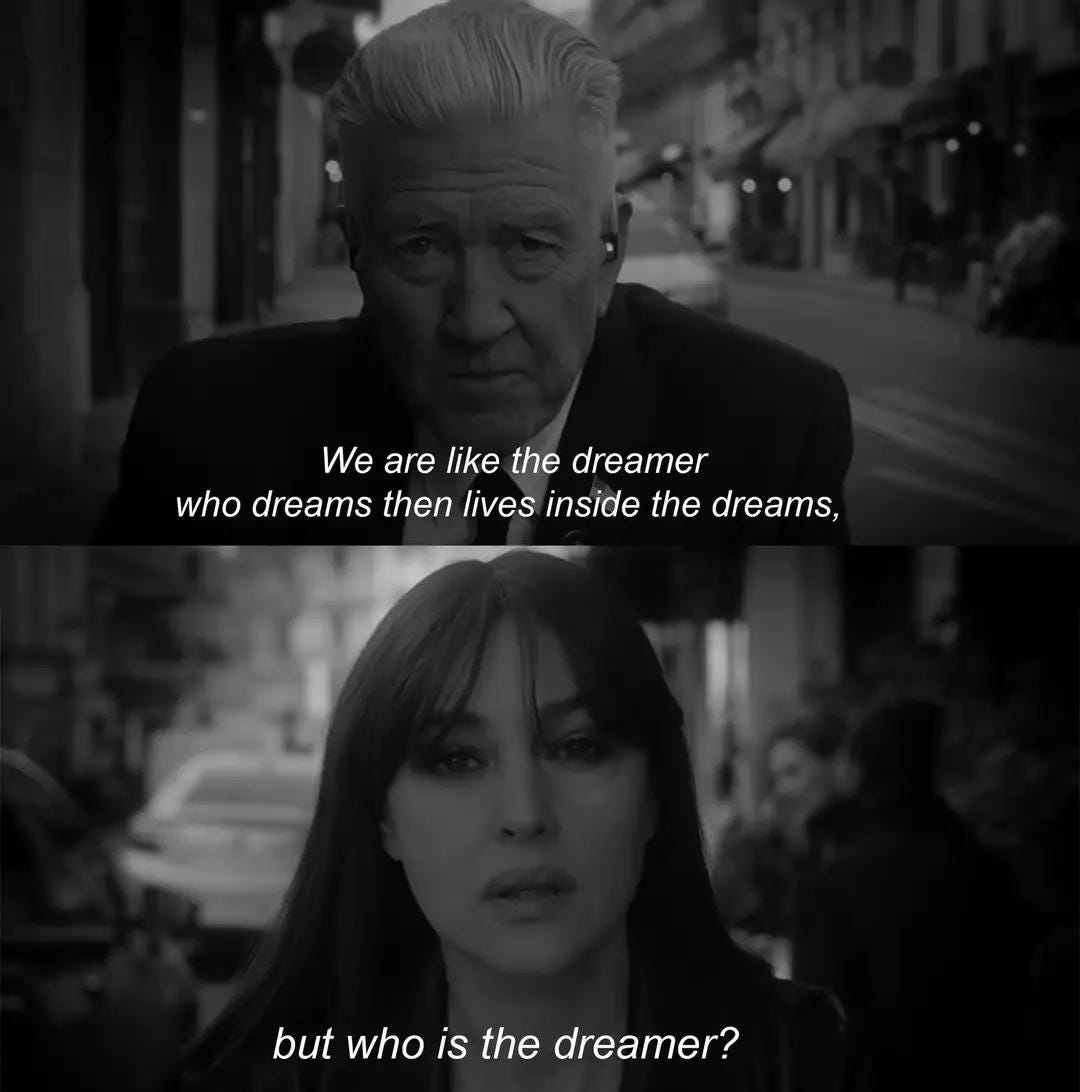
I drive back through Nevada, past the small tourist towns outside of Death Valley, through the hustle and bustle of Las Vegas, I cross the Hoover Dam, then descend into the deep canyons of northern Arizona. Phoenix is still several hours ahead, and I’m nearing the end of my 1200-song playlist.
It doesn’t feel like I’m coming home. The thought of going to work in my cube the next day on the 14th floor of a sterile, brutalist, government building makes me sad. After so many nights of sleeping under the stars, of being in perfect easy rhythm with the sun and moon, of breathing fresh air, and sleeping in a tent with my dog right beside me, the thought of waking up in the muggy morning knowing that the temperature will still reach above one hundred for several more weeks is exhausting. I am tired of desert and air conditioning. I want to be where the trees and rivers sustain me.
The deep unease, the lack of place, that I have felt for the last decade follows me still. If Arizona doesn’t feel like home, and Oregon doesn’t feel like home, then where, exactly, is home?
I think of Laura Palmer and Agent Dale Cooper arriving at the Palmer house after driving all night through a landscape much like this one. They hoped for recognition, for closure, but found the people changed. The features of the land remained the same, yet everything else had shifted. Then, with the realization that all familiarity is lost, something otherworldly breaks through: a recognition of that which follows us no matter where we go.
Perhaps there are forces that trail you through life, forces you can never outrun. You go to a new place, and the emptiness finds you. You return to the last spot that felt like home, but the people are different; no one remembers you as you were, or recognizes who you were in who you’ve become. There is a terror, deep and wide, and it follows you.
You are living, yet you are already experiencing your erasure from this Earth. You try to hold on to something solid, but that which you hope to grasp is fading, ephemeral.
In the end, you have only yourself and the deep, terrible void staring back at you. When the void catches you, when its presence consumes you, you shake in the presence of its terror and do what any animal would do: you scream.