Mourning Takes as Long as It Needs
Private rituals and the transmutation of loss

It’s an overcast weekday on the Oregon Coast in September and it’s after Labor Day, so the few summer crowds that come here have already dispersed. I’ve been camping for seven days, and in the morning I will have to begin the long, arduous drive back to Phoenix. I don’t want to go, not yet, maybe not ever, but I try to put all of that out of my mind because today is my last day on the Oregon Coast for at least a year and my mission is to make the most of it: to relish every sensation, to dive into the freezing water, to lick the salt from my lips, and to perform a ritual I have driven 1,500 miles to perform.
I know where the ritual will take place, I know my intentions, I know some of the materials that will be involved, but the rest I will discover when I am there.
Lately I’ve been stripping back the layers of my spiritual life, letting go of practices and west coast new ago mumbo jumbo I’ve picked up along the way. My distant Celtic ancestors practiced with little more than poems, songs, some folktales, and nature. By choosing to find the tools I need in the environment itself, I am becoming closer to them.
I park along the tree-lined cliff overlooking the Pacific, just as I have many times over the last fifteen years I’ve been coming to this part of the southern Oregon coast. All of Oregon’s coastline was designated state parks at the turn of the 20th century, offering 363 miles of publicly accessible beach to explore, but of all that coastline, this particular Cape is my favorite.
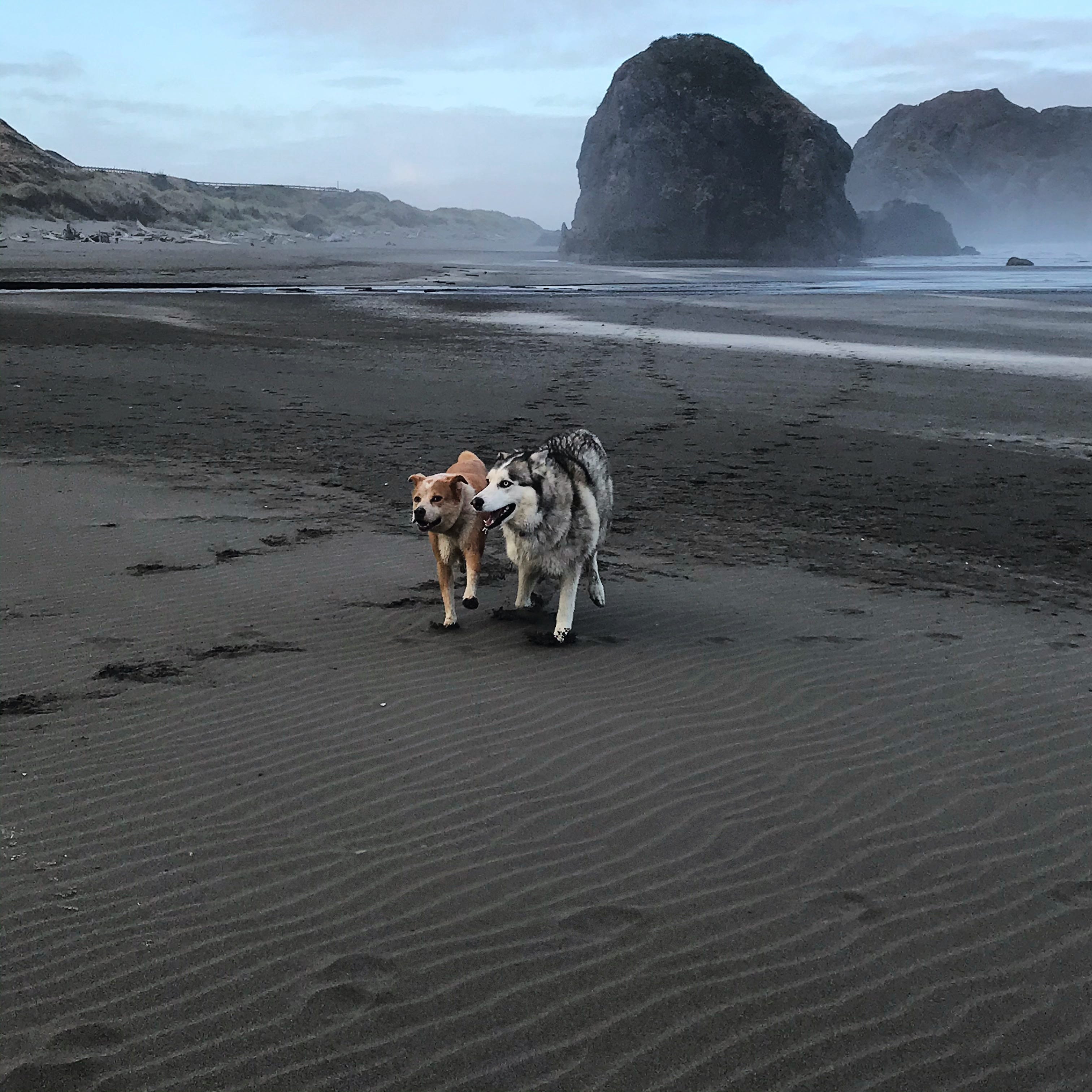
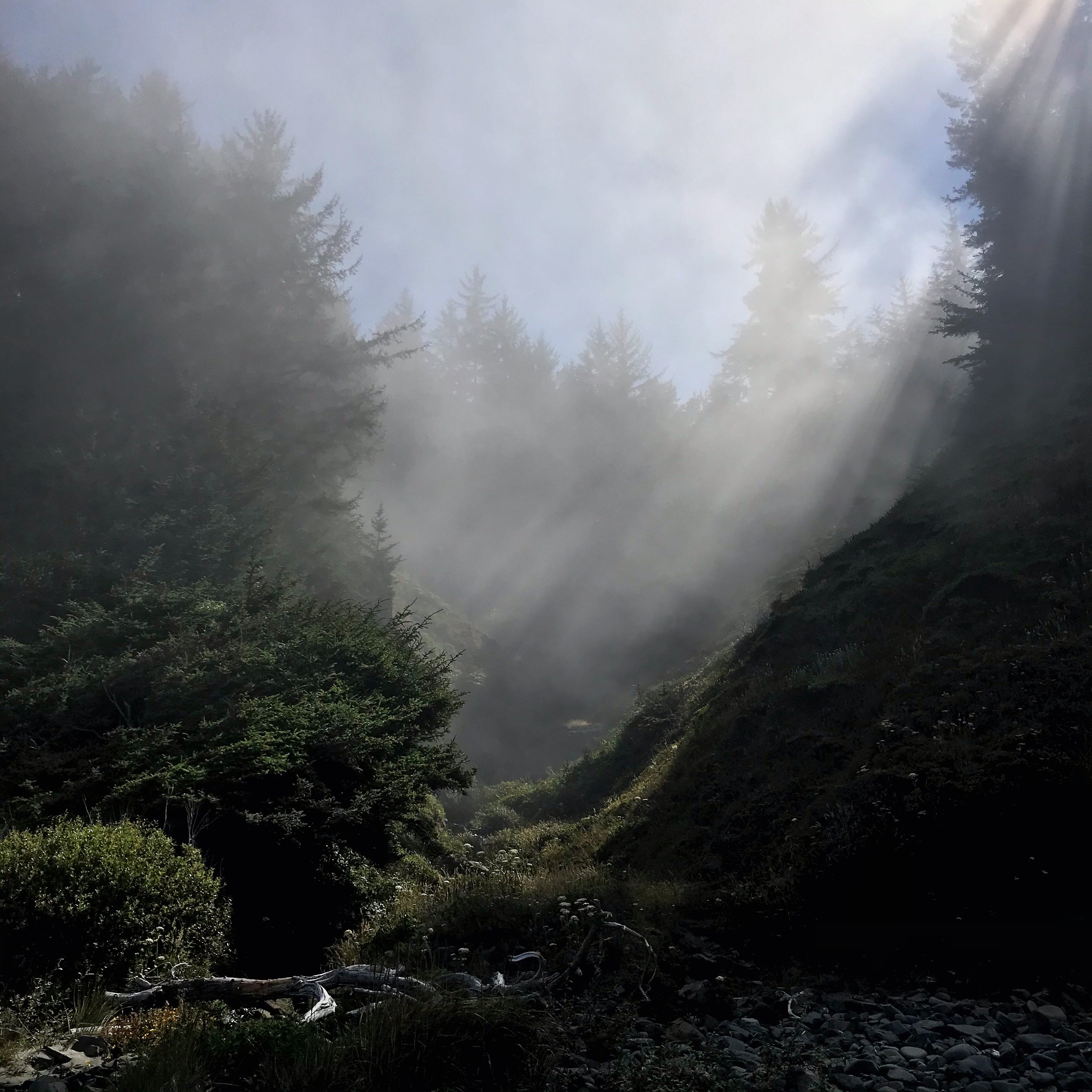
Sure, there are more dramatic vistas along that coastline, but what draws me here is the isolation—it’s rare that I ever encounter more than a handful of people on my hike down to the beach. Most often, I have both the trail and the beach below to myself. The descent down to the beach winds through dense Sitka spruce forest, and at the end a dangling rope which you must use to scale down the last fifty feet to the sand. I come here for the beauty and solitude, but also because it was the favorite beach of my dogs Maxwell and Daphne who have both passed.
I’ve been thinking a lot about Daphne today, as this is my first time back here without her. She was a puppy when I first came to this area in 2011, and she was an old lady on the cusp of 14 when we visited for the last time a year ago this week. She was an adult when we came here with Maxwell as a puppy, an older dog when we came here the first time after Maxwell had passed, and a senior when we came here with my third dog, Jones, for the first time. Today, I have carried a small vile of ashes—hers and Maxwell’s together—all the way from Phoenix. On my last day in Oregon, leaving their ashes on this beach is the ritual I have come to perform.
Jones and I set out on the trail. He runs ahead, nosing through the hedges and catching the scent of the ocean. We pass only one couple before reaching the rope, where the Pacific crashes against the shore and the brine fills the air.
Jones scrambles down first and I clumsily follow behind him. Intermittent flashes of sun make it warm enough to take off my sweatshirt. We walk the beach for a while and I try to get into the headspace to perform the ritual, but first, I need to just to be here now.
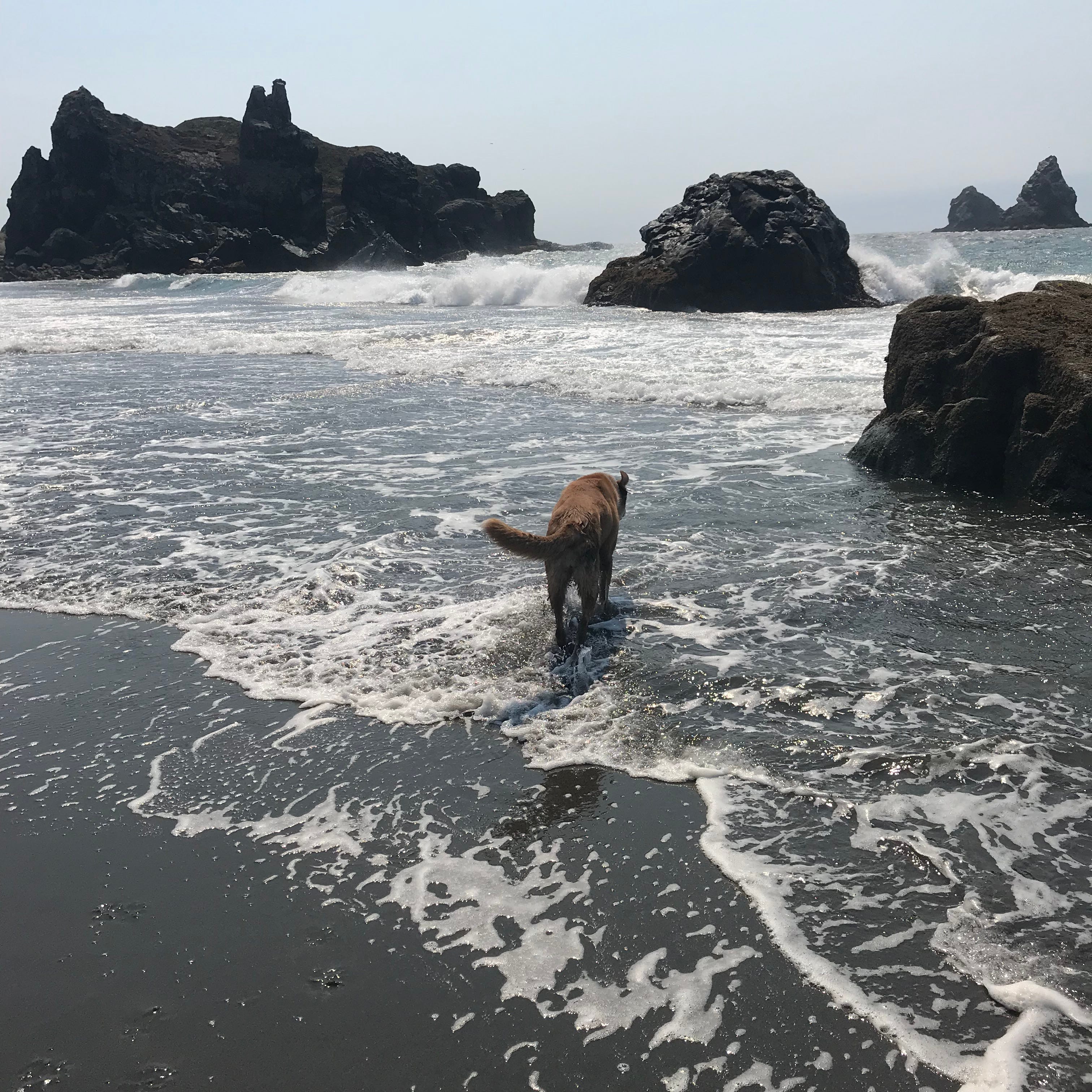
I see Daphne follow me into the tide and bark when I dive beneath an incoming wave. I am grateful for the memory. I strip down to my swim trunks and wade in, not looking forward to what I know I must do next. The Pacific is cold but I make my way out, far enough to watch the tide come in. I spot my wave in the distance and when it approaches, I dive under.
The cold is easier once you surrender. There is no place in the world I am happier than beneath a breaking wave. I dive several more times before returning to shore.
On the beach now, I walk the shore and gather items that catch my attention—smooth polished stones, bits of driftwood, crab shells, sand dollars, kelp. The ocean is a bounty. I make a pile and keep gathering. When I have enough, I begin the work.
I bathe myself in Abre Camino and Agua de Florida, ingesting the latter and spitting it over the space where I am going to work as I learned from the shaman in Peru.
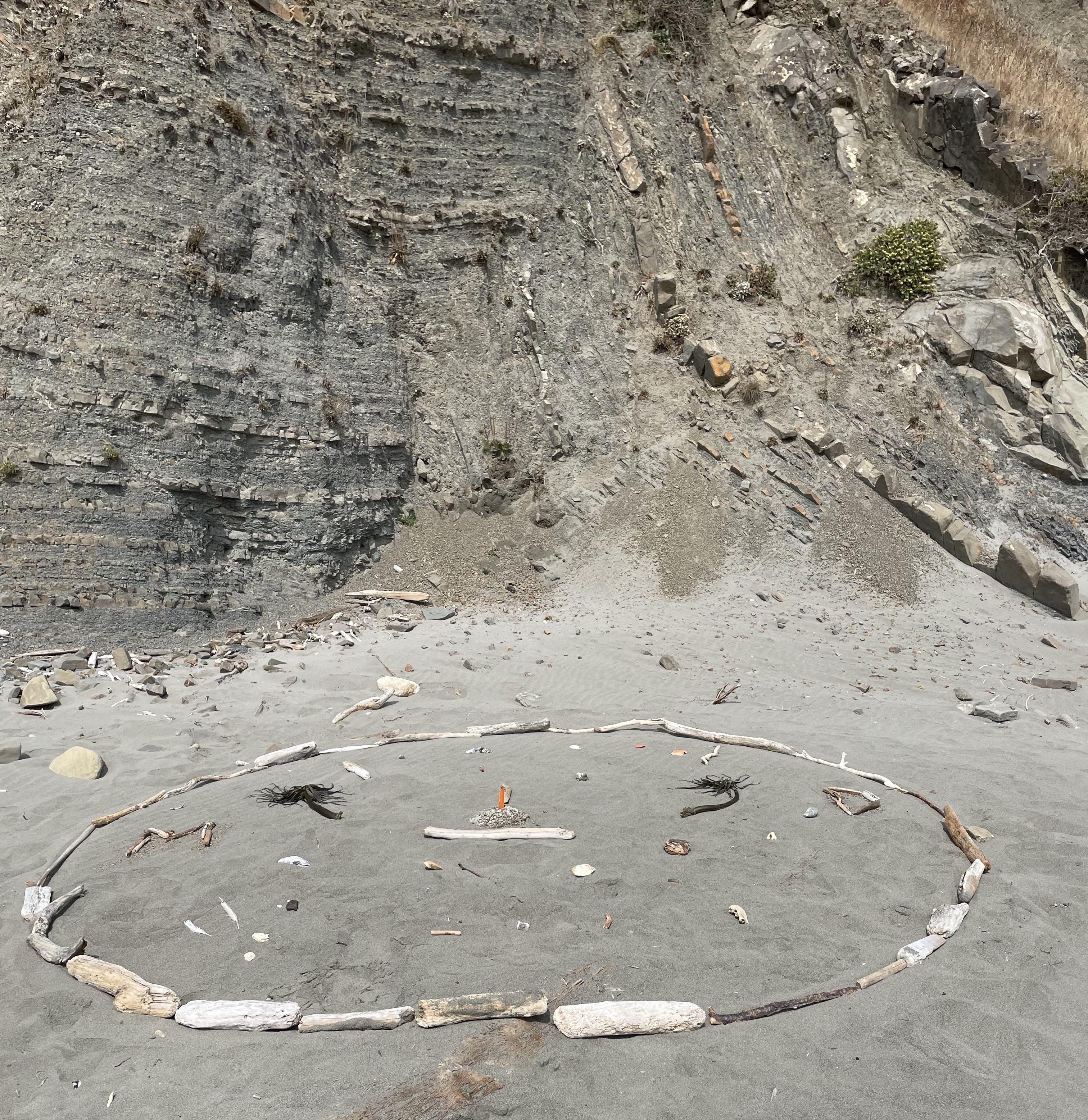
I take out my staff, found not far from here at the start of my practice many years ago, and draw a circle in the sand. I use driftwood to define its edges, then arrange the sea’s treasures inside in an artful way. I try to spell out “Daphne” and “Maxwell” with stones, but it proves to be too difficult so I settle for “M” and “D”. I form a small mound of stones and hollow its center. From my bag, I pull the vial of ashes. I hold the ashes in one hand and my staff in the other, I douse myself with the flower waters, say a prayer, then an evocation, turning to the four directions and asking the ocean to accept the remains of my dogs to its care.
The full sun breaks free of the clouds as I do this, which I take as a sign. I pour the ashes into the center of the stones and place an orange candle for remembrance. It’s then that I realize I’ve forgotten a lighter, but it doesn’t matter for the sun will melt the wax and wash it out to sea. A stone bracelet I’ve worn during ceremonial work for several years snaps in the course of my preparation, spilling beads onto the sand. This is the offering I will leave here along with their ashes.
As I say incantations and walk the circle, I am flooded with memories of both dogs, running free on this very beach. For a moment, I am overcome with grief. I feel Daphne’s head, the height it always was when she sought my hand, and I rub the air as if she were there. Maybe she is.
The spell is ending. I close the circle and say, “Amen” and “So Mote it Be.” I step out of the circle, leaving the ashes to bask in the sun and the tide, soon to be carried out into the mighty Pacific. These beautiful creatures are no longer in my care.
Coming fully back into the material present, I realize Jones is gone. I call, but he doesn’t answer. I finally spot him napping under a log far down the beach, his black-and-white coat blending perfectly into the scenery.
I am done feeling sad about my dogs who are no longer here. Today was not meant to be mournful, but rather a celebration. I remember this and shake off the sadness as I see both dogs, now just memories, chasing one another in the waves.
I smile then laugh then run to play with Jones. He is the dog who is here now, and he deserves all of me. The dead have had their time; we must live for the living.
As I walk the shore, I face some hard truths. I see the ways I’ve allowed my external world to become small when my inner life is enormous. I see all of the times I stay silent to keep the peace. I remember how I was when I first got Daphne—when I had the confidence and charisma to light up a room. I see that light and I call it back, promising to make some necessary changes when I get home. This is what I will take away from this ritual.
Jones and I spend a few more hours on the ocean before heading back. This will be our last walk on the beach for at least a year, and I don’t want to leave but we must.
I take one last look at the organic alter and I thank Daphne and Maxwell again for all that they gave me. I nuzzle Jones’ head and take a single photograph; it will be the only record of today.
I am more alive, more open, more aware that if I simply pass time forever, eventually time will pass me by. Mourning takes as long as it needs to, but eventually the rest of life needs you and you must come back.
As I drive back to the desert, I wonder about my dogs’ ashes. Will they be scattered by a bird? Will they sink into the beach? Will they blow away with the wind and become part of the forest? Will they be carried all the way to Japan or Russia? Will they sink to the bottom of the Pacific? I will never know, but whatever happens they will not sit in a urn on my shelf collecting dust—they will be out in the grand swell of the world, churning and turning in the great belly of the ocean along with all the elements of creation.