
Let the Mystery Breathe
Enchantment in a Material World.


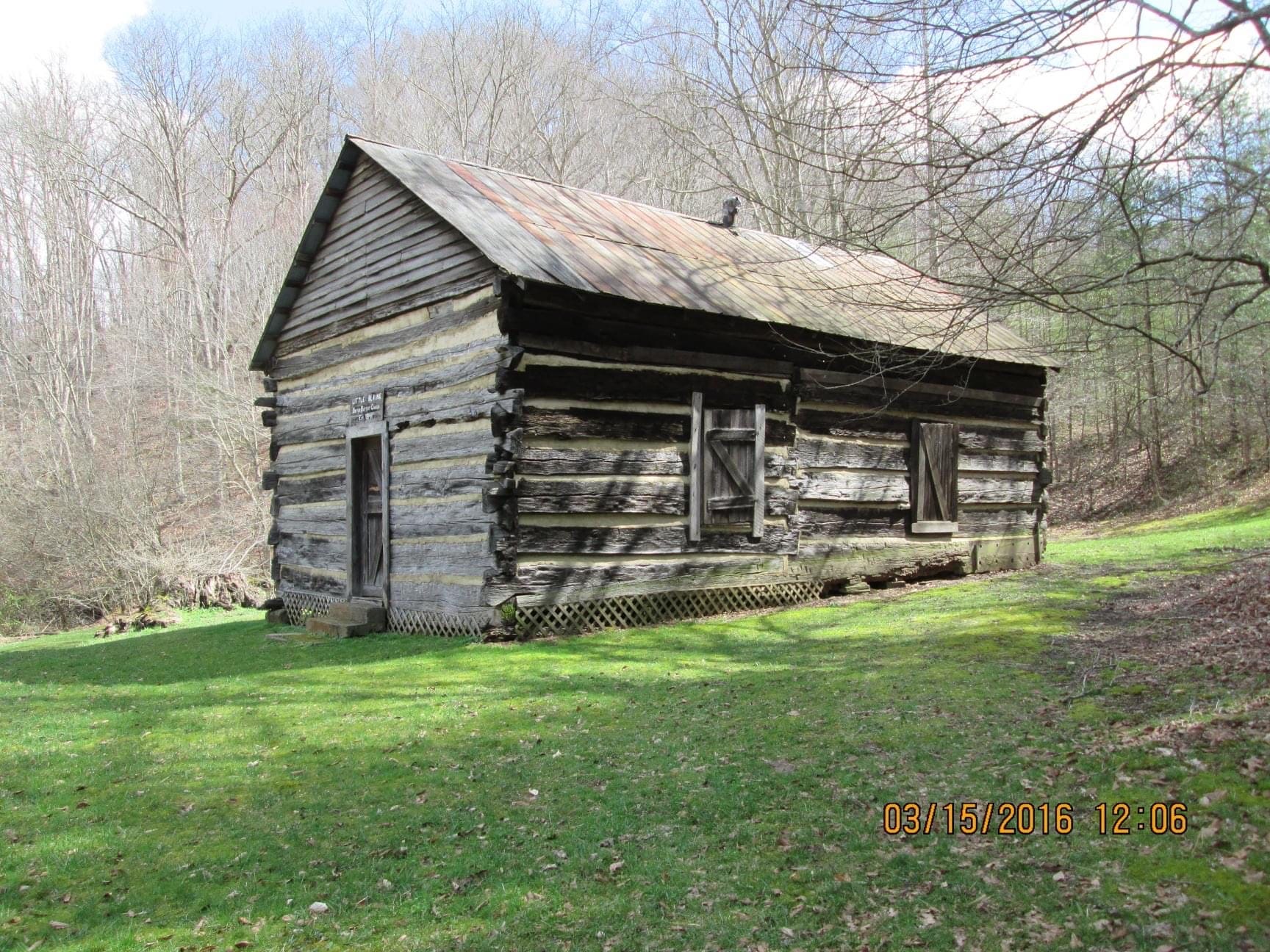
The hum of freeway traffic cuts through my neighborhood, a relentless drone far removed from the rustling leaves and whip-poor-wills I knew as a child on a farm in Eastern Kentucky. Back then, the world was effortlessly enchanted. The forest was a living, breathing organism full of trails and trees I had intimate connections to.
Here is a poem that I started in high school and finished around my 20th year. I present it here as it was then, untouched for 25 years:
Unclaimed World
I wonder where the rain makes the day new, where fallen leaves mold and tangle into unfamiliar forms. I have come to the forest to hear my voice, with no human voice to guide it.
From the top of the ridge I see the Earth stretch out, highways hug the curved hills. My view free of bare branches, limbs lingering up, mounting the distance between the ground and auburn sky.
In the deep hollows there is only what the forest makes, a world burning, a world renewed, and I am captive of the stillness, drawn to the perfection of each rock and tree and leaf.
Tracing my way back home I become lost where light is cut by birches and pines scraping sky above me. And when the stream’s stream finally leads me home, I turn to look at the unclaimed world I leave, tangled behind me in the last light.
Reading back over the poem today, I smile at its youthfulness. There’s an earnestness in those lines that I have lost to age, experience, and education. What is raw and unvarnished here was polished out of me in graduate school, the high cost of advanced degrees in creative fields that no one warns you about. But the loss I sense when I read the poem now isn’t just for craft, it’s also for enchantment itself.
The teenager who wrote those lines didn’t have to chase wonder—it was there, in the land I worked with my family, in the forest where I hid, in the close communion I had with my deep self in the natural world. As I progressed through academia, the institutions beat out of me any remnants of mystery, wonder, or backwoods religion, a beating reinforced by every hot take in The Atlantic, The New York Times, by Neil DeGrasse Tyson, and all the manifold proponents of materialism.
For a while, I was drawn to those gatekeepers like during the height of the New Atheist movement when I obnoxiously considered sending Sam Harris’s Letter to a Christian Nation to my evangelical parents for Christmas (fortunately, I did not).
I left the land where I grew up and the enchanted woods that were my home because I had to make a living, and like so many others I bought into the lie that “culture” could only be found in cities and in the cold, rational materialism of the intellectual class.
In graduate school, I read a bunch of fancy French theorists whose work depressed me. I waded through postmodern novels I neither liked nor understood. The New Atheist movement was at its peak shortly after I graduated, and I aligned with it for a time, listening to skeptics’ podcasts that left me smug and cold. But there was a longing in me that no amount of Daniel Dennett or Richard Dawkins could quell.
In 2008, I moved to Oregon and reconnected with nature through hiking and camping after spending much of my 20s in Chicago. The more time I spent in nature, the deeper the mystery of existence became. It wasn’t hard to reconnect with that part of me that has always felt most at home in a forest, and after one hit of DMT in 2012, any remnants of the scientific materialist worldview that lingered in me was gone. My world cracked open in the first of many ontological shifts that continue to this day. After experiencing “The Break” in 2015, I was living in a demon-haunted world again, a world where “The Mystery” intruded into my reality.
Today, I find myself in the fourth largest metro area in the U.S., having hopscotched across the country over the last 25 years. I used to sit by rivers to think, but now the only river that flows near me is the mechanical hum of the freeway. I’m boxed in by asphalt and lost in the digital notifications of machines we all swim in. To find enchantment in 2025 requires that I schedule time off, drive for hours, turn off my phone, and spend at least a day decompressing before I fall back into the deep rhythm of the natural world.
Yet there are some moments when it comes easier: like sometimes in the early mornings before the day heats up, before the water for coffee has boiled, when even the dog is lackadaisical with sleep, and I sit outside and listen to the birds and the hum of the freeway before my dreams have fully faded. That’s when I feel the presence of the Mystery most acutely, and I know that I am more than flesh and bone, career and social status. I am a soul dropped here into this dense material world, on an adventure that ends with a return home once this human experience is over.
These moments tie me back to my past, to the Evangelical churches where revivals ran for weeks and often past midnight, where old women spoke in tongues and flailed their bodies up and down the pew aisles, where pastors sweated and shouted as they beat the podium with worn leather Bibles, where hands were laid on the sick and the sinful alike.
It was a world I was at odds with but one that, now in my 40s, I circle back to. It’s not that I want to return to such churches or that I carry forward anything that resembles my mother or grandparent’s faith, it’s that I long for an enchantment that unifies the ancient and the modern.
I want a faith that reads Ezekiel's vision in the context of UFO/UAP disclosure. I want enchantment that builds a bridge between the connection that drew Druids to sacred circles on the Solstice and the wonder I experience when I use Grok (AI) to create Solstice rituals for Litha this year.
That wild, backwoods faith I experienced in my youth is a deep part of the American psyche; it helped settlers persevere in a dark and inhospitable frontier, and it’s a fire that runs all the way back to the old world where the Romans and their church tried to tame the wild pagan heart of the Celts but failed. My distant ancestors may have accepted Jesus as their savior, but they did so in a context where Brighid, Cernunnos, the Green Man, and all the other gods, leprechauns, and fairies of the old world still held sway in forest glens.
The enchantment that I long for is a reinvention and a restoration.
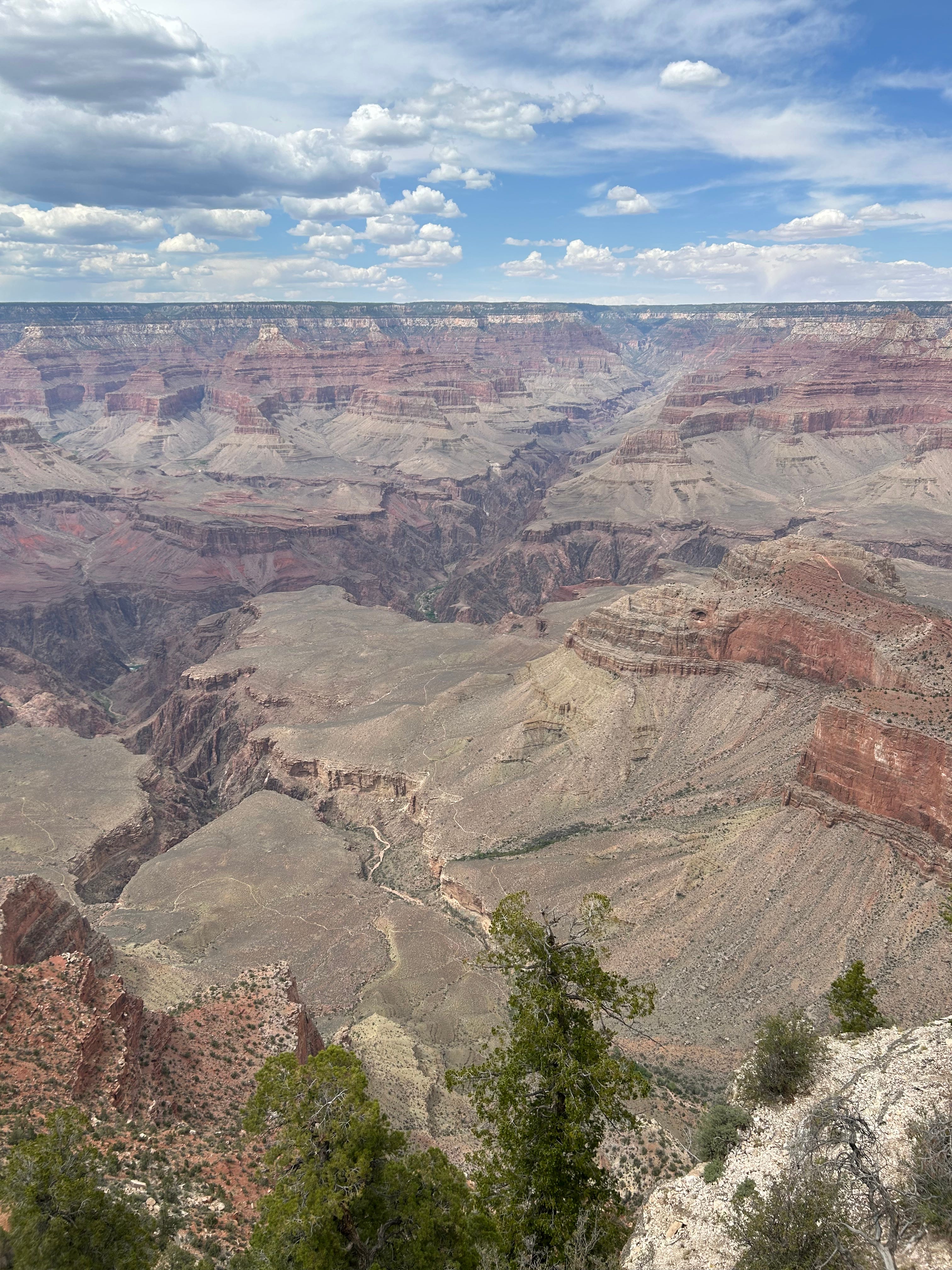
A couple of weeks ago, I stood on the edge of the Grand Canyon with my mother and aunt, both in their 70s, when I overheard my mom say to my aunt, “Do you think this is where God flung the angels out of heaven?”
We’d spent an hour earlier that day walking through the Yavapi Geology Museum, where the canyon’s formation over a couple of billion years is explained in elaborate detail with maps and diagrams, and I felt that old rationalist urge rise in me as I opened my mouth to challenge my mother, but then I stopped. In the last two years, I’ve come back around to so much I dismissed in my 20s and 30s during this weird period of inversion in my life. Though I’ll never believe the Grand Canyon was formed by angels being flung from heaven during Satan’s war with the Creator, I know arguing with my mother about it will just entrench her beliefs. Worse, it’ll cast a shadow of judgement over this preciously short time we have together, and that’s the opposite of what I set out to do on this roadtrip with my aunt and mother. At this stage in our lives, showing her that I love her as she is matters more than proving I’m right. I close my mouth and picture for a moment an angel crashing to Earth from the Heavens and creating the Grand Canyon. It’s a powerful image, as nonsensical as it might seem, and I appreciate that I stay quiet and share this view with my mother, letting her take in the wonder in whatever way suits her best.
The idea of angels and heavenly war creating the Grand Canyon may sound crazy to educated folks, but the Big Bang’s “one free miracle” of all existence squeezed into a speck, then bam, infinite universe—is just as wild. I’m sure in time, our descendents will read about our belief in the Big Bang and they will laugh at our foolish naivety.
We are living on the precipice of profound change with AI, nano-computing, UAP/UFO Disclosure, and studies in the DMT realms racing to dismantle all we think we understand of the modern world. Anyone who believes they understand all that is going on in this reality is clearly not paying attention. We are all feeling our way in the darkness.
Here, in my 40s, I look back on a childhood forged in forests and the backwoods fundamentalism of American Evangelicals, trying to blend it with all I’ve learned from two fancy college degrees, a decade in academia, thousands of books and articles read, an intuitive mysticism, magickal practice, four decades of “lived experience”, and my choice to live in an enchanted world.
I want the mystery to touch me and to understand it, knowing I never can and never will. Accepting that, while still striving to understand, sounds like a rich human experience to me. At this point, I am content to stand back, watch and learn, and to stop trying to put labels on all of creation like Adam.
When I stand in the garden I think I’ll just let the mystery breathe.
(Bonus 1: My inspiration for this post’s title which is also featured in the opening credits of Season 2 and 3 of the show The Leftovers)
(Bonus 2: A fantastic podcast episode that helped me sort through what I was trying to say in this post Back from the Borderline)
Very deep, yet I understood what you were trying to say. We must all determine our own salvation, whether that be through the bible we hold dear, church sermons heard and taken to heart; or it be through lore handed down through the generations of our families; or if it be through education in this uncertain era; or it be in the wild, absorbed into our being, loving the natural blessings so many take for granted. You are turning out to be a wise man in your maturity. Loved your mystery breath!