
How Do You Talk to a Liberal?
It's not me, it's you.

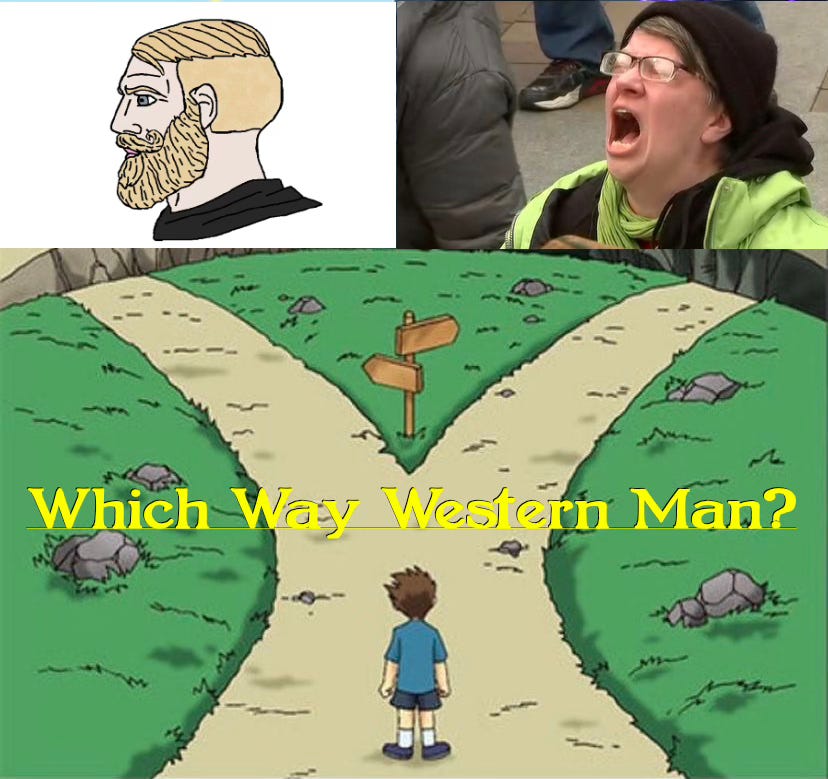
Growing up gay in Eastern Kentucky, surrounded by coal dust and conformity, I always felt like an outsider. I dreamed of escaping to a big city where I could finally be myself. I came to believe that Americans who called themselves “liberals” would accept me—after all, they celebrated diversity, valued free speech, science, and rigorous debate. They embraced Madonna’s sexual revolution and didn’t force me to erase her songs I’d recorded from the radio, as my conservative mother once did. For nearly 30 years, I considered myself a liberal and made my home in the Democratic Party. Like many from conservative areas, I turned to liberalism for acceptance.
Oh boy, the times they are a changing.
Over the last decade, I’ve watched the ideals that drew me to liberalism twist into something unrecognizable. The first principles of free thinking, speech, and debate that led me to identify as a liberal have been replaced with an ideological dogma I neither consent to nor agree with.
I first noticed this shift in 2015 at an all-faculty district in-service at the community college where I was a professor. An hour into the routine meeting that always kicked off the year, a dry, monotone presentation announced that March would be “Whiteness History Month” at the college. The month would focus on “whiteness as a social construct,” with lessons and re-education activities designed to make students and staff examine their “supremacy,” their “whiteness,” and their “privilege.” My non-white, ultra-liberal friend sitting beside me whispered, “Amazing.” I wasn’t so sure.
Though I’d read widely the works of countless black authors—Bell Hooks, Toni Morrison, James Baldwin, Richard Wright, W.E.B. Du Bois, Langston Hughes, James Weldon Johnson to name a few—done an independent study with one of the nation’s most prominent black lesbian poets in college, and held a Masters degree from a school where I read tomes of theory, I’d never explicitly encountered “Critical Race Theory.” I was about to get an introduction.
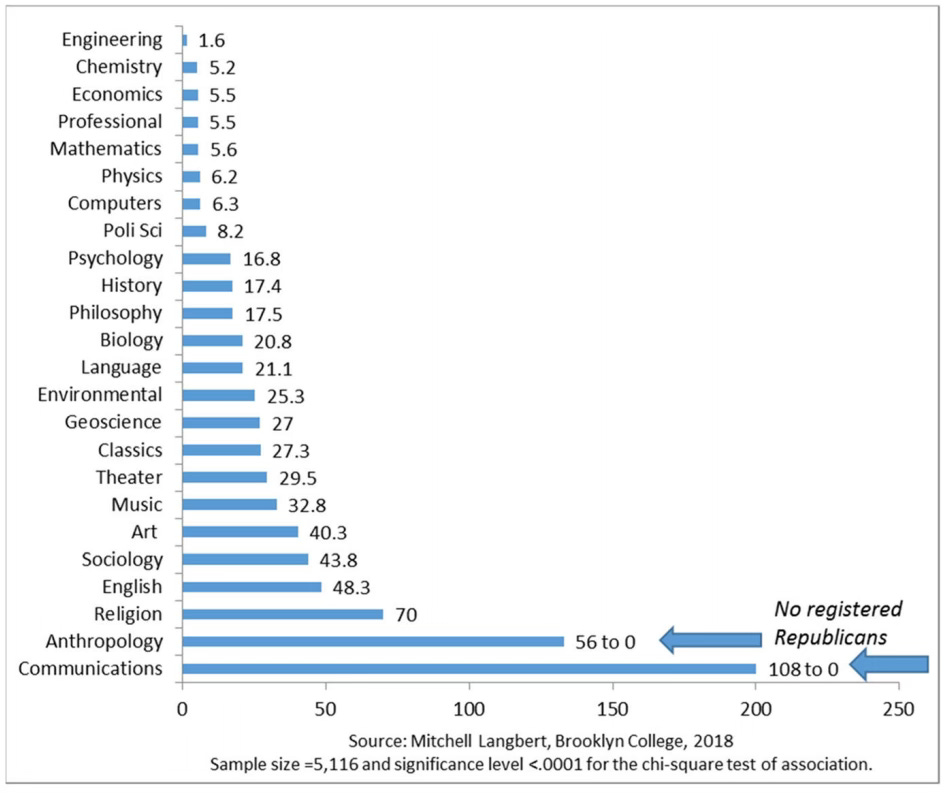
The more I looked into the school’s planned month of scolding white students for their “supremacy,” “privilege,” and “inherent racism”, the more I wondered if it was wise to dedicate an entire month to chastising 87% of our student body. Every other group at the school had weeks or months celebrating them—Black History Month, Latino Heritage Month, LGBT Pride Month, South Asian Awareness Week, and so on, but white students—the vast majority of our student body—they would not be celebrated. They would be scolded because there was nothing redeemable in their cultural heritage. I grew concerned about this activity and other similar directions the school was taking. What troubled me most, though, was that among a faculty of roughly 1,000 teachers, only one dared to speak out publicly on the faculty listserv—a history professor nearing retirement. He wrote a rational, well-defended argument that the month promoted an “anti-Western bias,” pairing it with an impassioned defense of Western civilization that acknowledged its historical flaws and the work that still needs to be done. In my six years at the college, it was the most well articulated and passionate piece of faculty writing that I read.
What followed was a flurry of castigation from the faculty. How dare this man—A WHITE MAN!—defend Western culture? How could he be so insensitive to these efforts? This was exactly why we needed Whiteness History Month. I sat in my cubicle, reading these hysterical responses, before heading to teach a class on Ta-Nehisi Coates’ “The Case for Reparations” which I had chosen as part of my curriculum on the working poor. I had to admit to myself that I sided with the history professor. It bothered me that I—someone who had voted for Jill Stein over Barack Obama in the last election because I felt Obama’s first term was too aligned with the worst of George W. Bush’s policies that he had ran against—could not speak up in defense of my colleague. Nothing in his defense offended me, and I, too, questioned whether this was the right path for our college to take. At the very least, this sort of healthy debate was what drew me to academia in the first place. But as a newer faculty member, I knew that if I ever hoped for a cushy committee assignment or any favors from the administration in the future—keys to thriving in academia—I’d keep my damn mouth shut. So I did.
Academics around the country, starved for stable work and recognition, make these choices every day.
The Slow Creep of Dogma
What we would come to call the “Woke Mind Virus” has spread like cancer over the last decade, jumping from lecture halls to newsrooms, HR departments, and every corner of public life. I noticed how the fever intensified after the summer of 2020, when I watched riots in Portland, coupled with widespread calls to defund the police, and an ill-planned state law decriminalizing all drugs turn huge swaths of the city I’d once loved into a dirty, dangerous shitholes.
(Does this sound exaggerated to you? Here’s just one statistic—According to the Portland Police Department homicides in Portland rose 83% from 2019 to 2020. )
That summer, I was told that as a white man, the only way to be an ally was to shut up and listen. Any details about my “lived experience”—what I had read, who I had known, where I had worked, who I had loved, how I had always made sure that men and women as well as minorities and people of conflicting political persuasions were included in my curriculum didn’t matter—all that mattered was that I was a white male. I watched as liberals went from defending free speech to policing it. They banned users on Twitter, demonetized videos on Youtube, shadow-banned posts, doxxed dissenters, and shouted down university speakers with even moderate views they disagreed with. Takes like “there are only two genders”—ideas that wouldn’t have raised an eyebrow a decade before—became fireable offenses. Many of us watched in horror, but few had the courage to speak up.
It wasn’t just the tactics that had changed; something profoundly different and totalitarian had risen on the political left. Something in the soul of liberalism felt possessed by demons.
Step out of line, even slightly, and the labels flew. Black conservatives? Uncle Toms. Gay men who rejected the male vagina, or lesbians who rejected the female penis in dating partners? Bigots. Women worried about their safety or the fairness of girls competing against biological males in sports? TERFs. Working-class Latinos who cared about safety and borders? White-adjacent racists. Black men who didn’t see in Kamala Harris a figure that inspired confidence? Misogynists. On and on the smears piled up whenever any individual deviated from the box the liberal elites put them in.
Barack Obama scolding young black men who didn’t want to vote for Kamala Harris might’ve been a blip on your radar, but for the many young black conservatives I follow on YouTube, it was a firestorm. They were asking the same questions I did when told that because I’m gay, I must support drag queen story hour, infinite genders, and castrating children: Who the fuck are you to tell me what I believe? Why do you assume you own me? That’s not what I signed up for, and like millions of others I decided to walk away. In August of 2024, after nearly 30 years of being a Democrat, I officially registered as a Republican.
Costs
Many of my oldest and dearest friends are liberals—people I’ve laughed with, cried with, shared late-night talks with, people who have supported me and who I love. I still admire transgressive art that would make my churchgoing friends clutch their pearls, and on issues like sex, drugs, and the environment, my views remain far left of where many conservatives are comfortable. I still bear the torch of the working poor—of all races—as my primary political orientation.
Truth is, I belong to both sides and neither side—I’m truly an independent.
Yet, since I started posting moderate, right-of-center writing online last fall, many people have unfriended me. That number climbs with every post. Many of these are casual acquaintances but some I considered good friends, and a few are members of my family.
Worse still are the friends I haven’t heard from—those I care deeply about but don’t engage with often. In my new reality, I wonder about the growing gaps between our calls, the Christmas cards that came every year but didn’t this year. Are we still friends? Would they want me to reach out if I were in town? Or are they just too polite to hit unfriend? I hate feeling this way about people I’ve known most of my adult life. For the most part I don’t care, but it’s hard not to let a little paranoia seep in.
This week, I made a mild post about the Department of Government Efficiency on Facebook, after posting almost nothing since the election. It was a reaction to the constant leftist disinformation I was seeing about DOGE. The post was this:
“Imagine a spouse racking up debt at 123% of your yearly income—like the U.S. national debt hitting $36.2 trillion while GDP’s at $29 trillion. They’re not just spending everything you make; they’re borrowing an extra 23% on top, every year. You finally grab the checkbook and say, ‘Enough, balance the damn budget,’ and they scream ‘Hitler!’ while rallying the neighbors to hate you. That’s DOGE. Y’all need to calm down.”
No one came at me with a flamethrower this time, though I had to debunk a claim in the comments that Trump is turning Guantanamo Bay into a concentration camp (he’s not, obviously. The person who made the claim is Jewish and knowing him well, I’m sure he doesn’t even realize how offensive it is to make that claim to someone who voted for Trump). But I don’t care—I’m not here to censor anyone’s hyperbolic overreaction and I’ll discuss this exchange privately with my friend. No, there was no real flamethrower this time but two more people did unfriended me, bringing the total to over 30 out of my 400 friends—roughly 7-8% of the people who claimed to be “friends.” I’m sure many more have muted or unfollowed me, but that’s not my point.
No, I’m not after sympathy and for the most part I don’t care about the people who are no longer speaking to me. Anyone who believes they have the right to police what I think, write, or say—well, as the philosopher Marilyn Manson once wrote: “I wasn’t born with enough middle fingers.”
No, I don’t want pity; I am trying to make a broader point about our divisions because I see us at a dangerous cultural moment where we are allowing algorithms and misinformation to divide us from our friends, families, communities, and selves. I keep hammering on this point because any student of history can see that these trends are the ones that divide nations. These trends are the reasons empires fall.
The Democratic Party I once rooted for feels alien to me today—an elitist institution drumming up division with ceaseless, insincere identity politics; a party mainstreaming ever more postmodern and fringe ideas; a party abandoning common sense and first principles; a party that lied about Biden’s cognitive health and colluded to anoint the deep state puppet who goes by the name Kamala; a party more obsessed with purity tests than people. I didn’t leave that party—it left me, and many others like me, behind.
Every time someone cuts ties over a difference of opinion, it’s not just political—it’s personal. It pushes me, and folks like me, further from the fold. You can’t scream “tolerance” while torching bridges. In 2024, a vast coalition of lifelong liberals abandoned the left, and if the left insists on this direction, I’m quite certain many of us will never return to the fold.
Which Way from Here?
I want a Democratic Party that actually cares about the working class, not the smoldering, lawless wreck the current party has become. If there is any hope for that transformation, it starts with you, the handful of liberal friends who might read this.
It starts with considering that maybe patriarchy, racism, and homo- or trans- phobia shouldn’t be your go-to explanations for why rational people disagree with you. Maybe while you were busy “doing the work,” the rest of us were trying to survive in a culture growing increasingly hostile to our survival and our voices—culturally, politically, and economically.
Maybe every time you assume someone sees things your way because of their race, class, gender, sexual orientation, or level of education—the racist, homophobic, elitist, or sexist one is you. Maybe, just maybe, we know some things that you don’t.
Instead of telling everyone else to check their assumptions, maybe pick up a mirror and check your own. When you talk about diversity, consider having a few conservatives in your life—they do make up more than half the country after all and they come in all shapes, races, and sizes (though only two genders). When you talk about equity, make space for the white working poor who have never had—and still don’t have—that elusive “privilege” you love to chatter on about. There’s no group in this country more shunned, mis-aligned, or forgotten than the white rural poor.
Maybe, instead of defaulting to moral outrage, try compassion. Listen—really listen—instead of reaching for the block button.
Cancel culture is toxic. It needs to go the way of bad ideas of the past like shoulder pads, frosted tips, MC Hammer pants, and pronouns in bios.
We’re better than this—or at least we used to be.
(P.S. The title of this week’s post is a deep cut. Did any of you catch it?)
Everyone sorta believed the lefty rhetoric about the coalition of the ascendant and the libs took that to mean that they already had a permanent majority and thus could operate with impunity. More than anything, this overbearing arrogance and ideological fervor is the Obama legacy. I'm glad the fever finally broke
Thank you for posting this. As time goes by, the more I identify as right-leaning center. I question everything. Sometimes I think I'm not where I belong because of my hard leftist past, but I keep coming right back to the center and that's where I'm comfortable. I'm glad others are too. Extremes are just that--extreme.